Curiosity-of-a-Childs-Mind

Curiosity of a Child’s Mind

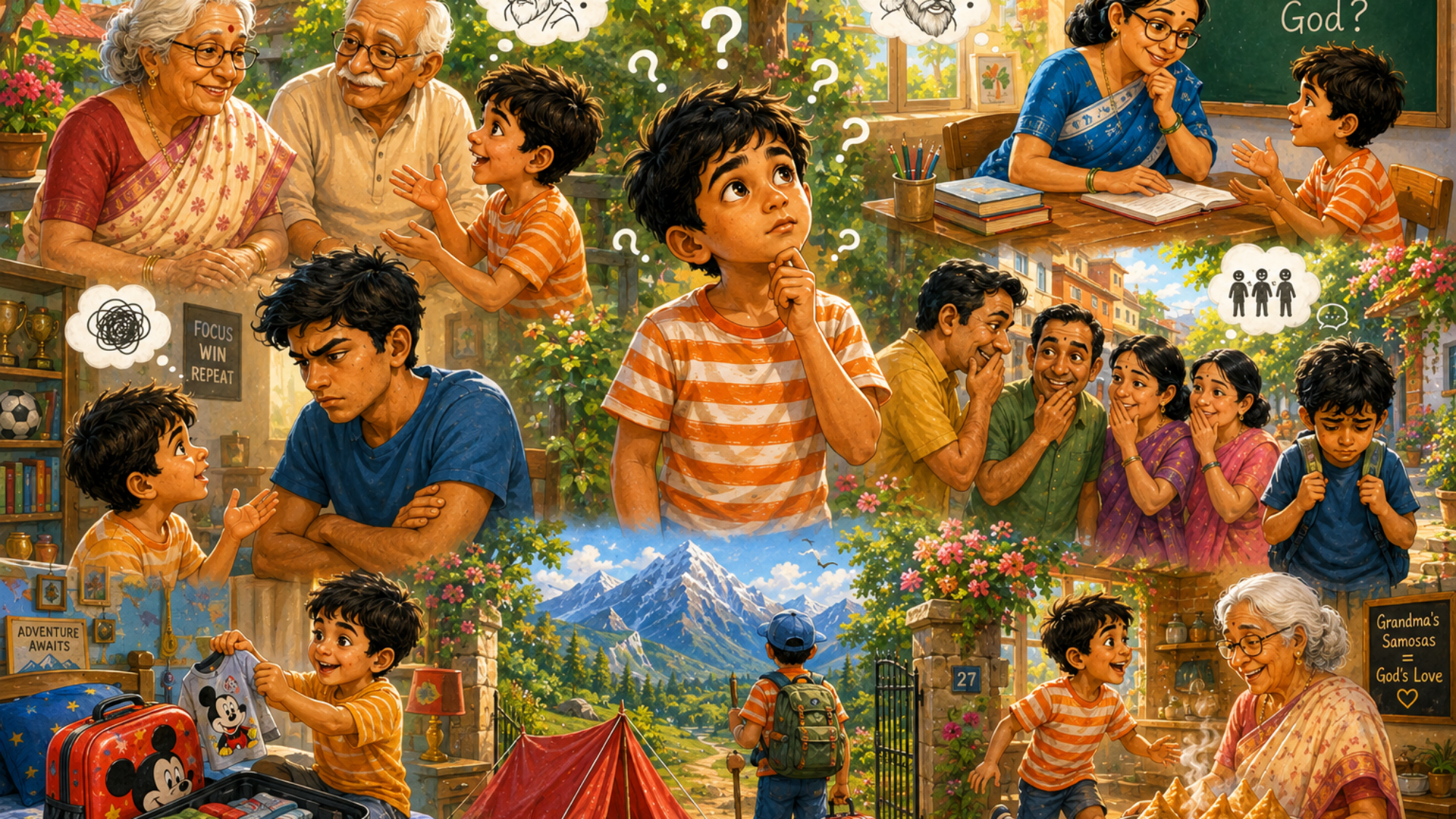
One day, a boy of ten was perplexed. Confused beyond his wits.

Bumps and Bruises

Bumps and Bruises

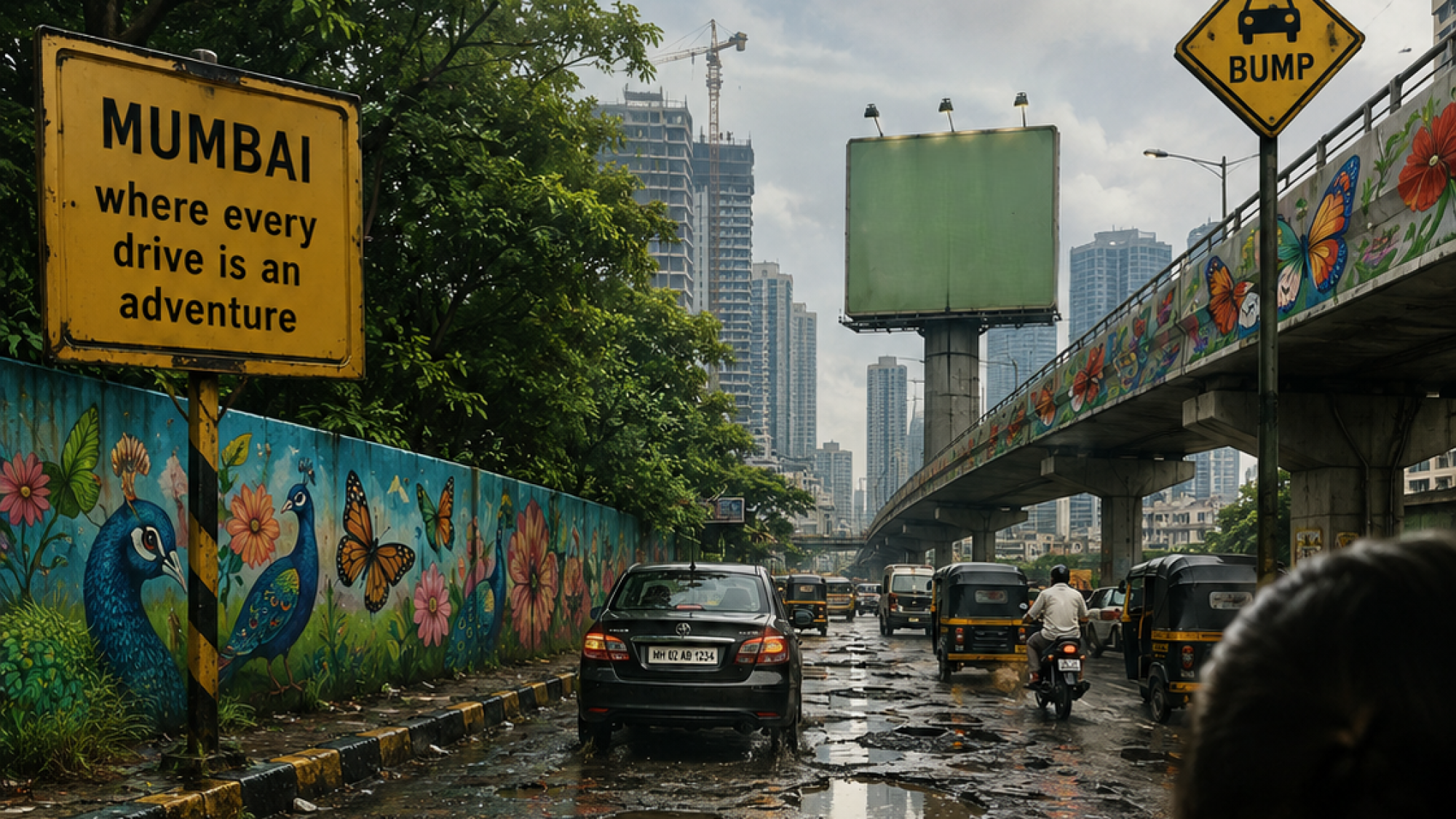
I’ve spent sixteen years driving across Mumbai and outside.

Who-Gets-to-Decide-What-Our-Children-Learn

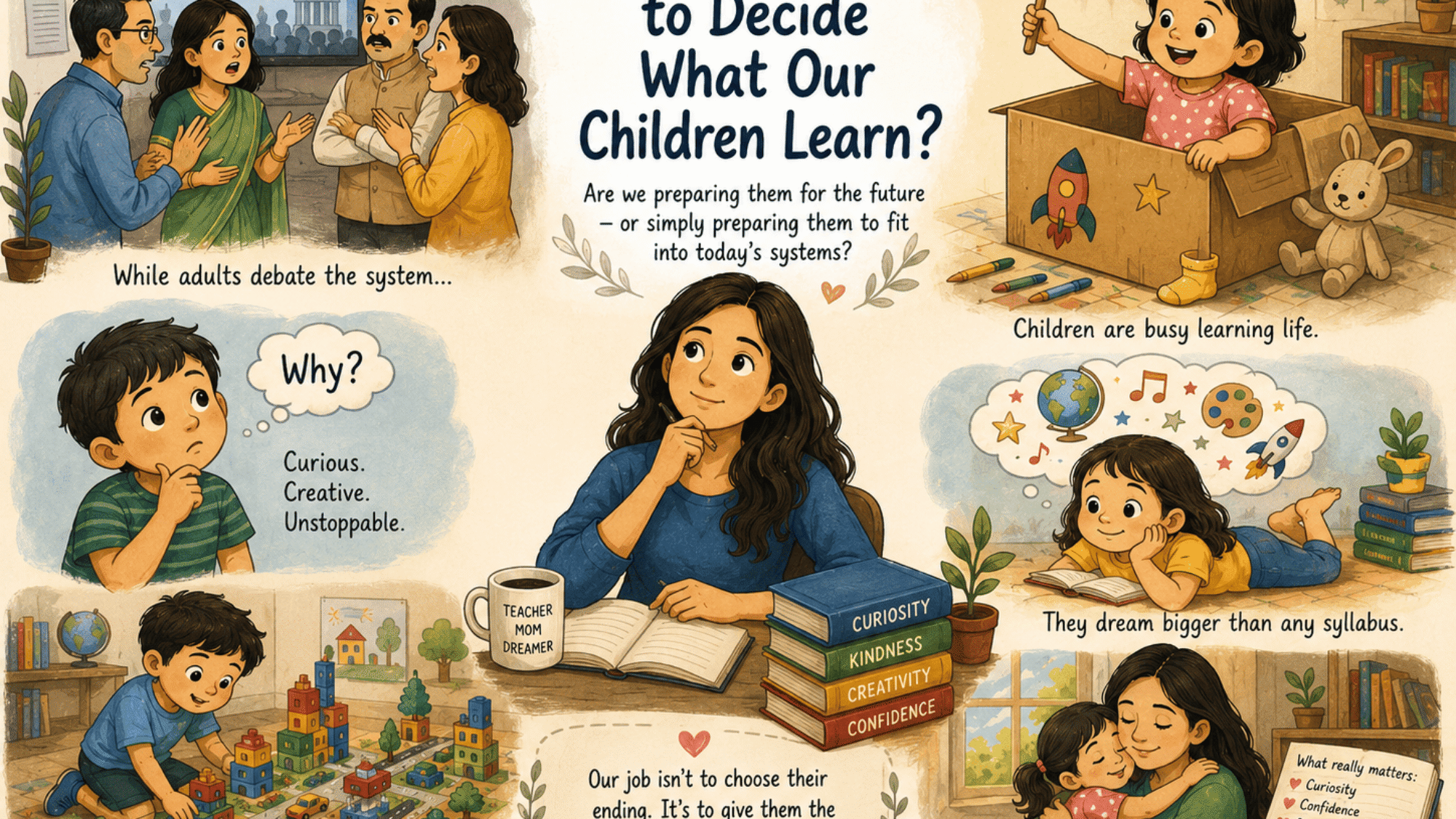
Who Gets to Decide What Our Children Learn?

As a French educator and a toddler mom, I’ve been asking
myself an uncomfortable question: are we preparing our
children for the future – or simply preparing them to fit into
today’s systems?

Are We Raising Children for the
Future… or for the Past?

The past few weeks have been noisy.

Not toddler-has-found-a-marker-and-a-white-wall noisy (although that’s a
different kind of national emergency in my house). I mean the kind of
noisy where every news notification arrives with another protest,
another policy change or another debate about education. As a French
educator, watching conversations around removing French from
students’ curricula felt deeply personal. As a mother, it felt unsettling.
Somewhere between government policies, curriculum revisions and
political debates, I found myself looking at my toddler—who currently
believes socks are optional, spoons are drumsticks and cardboard
boxes are luxury real estate—and wondering: What kind of future are
we actually preparing her for?

Not which textbook she’ll carry. Not which language she’ll eventually
learn. But whether she’ll grow up believing she gets to choose.

We love telling children they can become anything they want. Doctor.
Artist. Entrepreneur. Marine biologist. Content creator. Princess
Dinosaur. (The last one seems surprisingly achievable if you’re under
five.) Yet somewhere between kindergarten and adulthood, that
sentence quietly acquires an invisible footnote: You can become
anything… subject to terms and conditions. And lately, those terms seem to
change every few years.

The irony is that while adults are busy arguing over what children should
learn, children themselves are busy learning things nobody taught them.
Give a four-year-old a cardboard box and they’ll build a spaceship. Give
an adult the same box and they’ll ask where to recycle it.

Having spent years teaching children, I can confidently say they are
gloriously difficult to standardise. The quiet child who barely says a
word in class suddenly writes the most beautiful story. The one who
struggles through grammar effortlessly switches between three
languages at home. The child who can’t sit through ten minutes of
maths somehow spends two hours constructing a Lego city complete
with traffic management that’s probably more efficient than most Indian
roads.
Children are wonderfully inconvenient that way. They stubbornly refuse
to fit neatly into boxes.
Which is unfortunate.
Because adults seem rather obsessed with manufacturing them.

As parents, I sometimes think we’ve confused preparing children for the
future with preparing them for next Tuesday’s test. We optimise for
marks, then admissions, then degrees and finally jobs—all while
forgetting that by the time today’s toddlers become adults, many of
those jobs may no longer exist. The careers they’ll eventually pursue
probably don’t even have names yet.
So perhaps the question isn’t whether our children should learn French.
Or coding. Or AI. Or robotics. Those are all wonderful things. The real
question is whether we’re raising children who know how to learn long
after someone stops teaching them. Can they ask uncomfortable
questions? Can they disagree without becoming disagreeable? Can they
change their minds when presented with better ideas? Can they create
instead of merely consume? Can they remain curious when the world
insists on certainty?
Because curiosity has a rather rebellious habit.

It refuses to stay inside a syllabus.
As a mother, that’s oddly reassuring. I cannot control government
decisions. I cannot rewrite educational policy. I cannot predict which
subjects will survive the next reform. But I can decide what learning
looks like inside my home. I can let my daughter make spectacular
messes in pursuit of tiny discoveries. I can allow boredom instead of
filling every minute with structured activities. I can encourage the fiftyseventh “Why?” before breakfast instead of rushing to answer the first. I
can surround her with books, stories, languages, music and people who
think differently from us. Most importantly, I can make sure she knows
that her worth will never be measured by one exam, one subject or one
career.
Maybe that’s how we future-proof our children—not by trying to predict
tomorrow’s world, but by raising humans who can adapt to whichever
version of tomorrow eventually arrives.

Democracies will evolve. Governments will change. Educational policies
will continue to swing like a playground seesaw. But childhood? We only
get one chance at that.
So perhaps the question isn’t whether democracy is failing our students.
Perhaps it’s whether we’re becoming so busy designing the perfect
system that we’re forgetting the beautifully imperfect children it’s
supposed to serve.

After all, children aren’t blank pages waiting for us to write on them.

They’re stories already unfolding.

Our job isn’t to choose the ending.

It’s to make sure they always have the freedom to write it themselves.
How-Becoming-a-Mom-Changed-Me

How Becoming a Mom Changed Me!

And I realised that raising your own child is an entirely different journey.

I thought I understood children.

After all, I’d spent years teaching them, caring for younger cousins, and watching little minds grow in classrooms. I believed I knew what nurturing looked like.

Then I became a mother.

And I realised that raising your own child is an entirely different journey.

No two mothers experience motherhood the same way. Every journey is unique, filled with moments of joy, doubt, pride, exhaustion, laughter and tears. Yet, if there’s one thing that’s universal, it’s how deeply motherhood changes you.

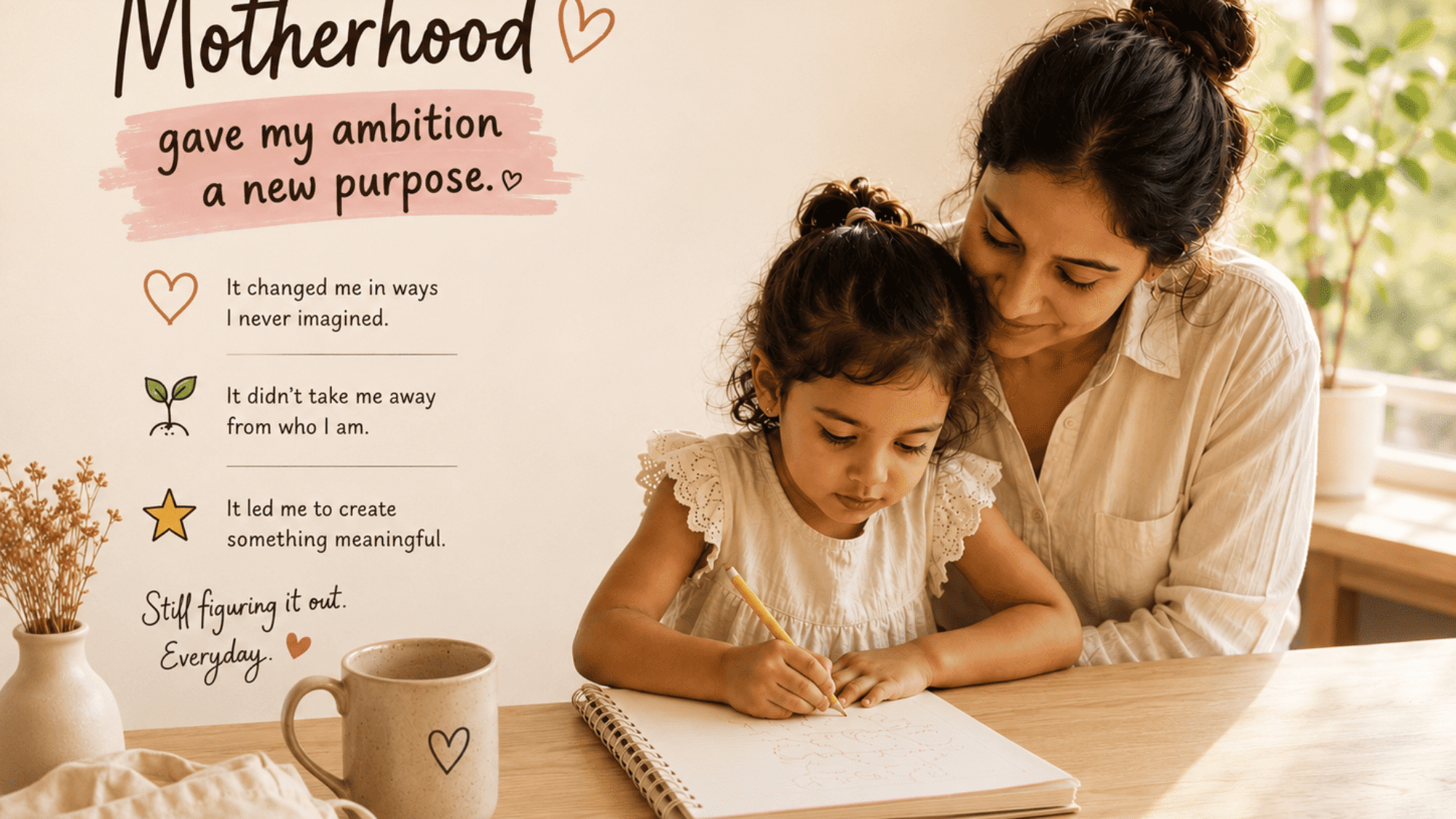
Motherhood changed me in ways I never expected.


It changed my priorities, my ambitions, my routines and even the way I measured success. Somewhere along the way, “me” quietly became “we.” Without even realising it, every decision started revolving around a tiny little person who depended on me completely.

It made me stronger and softer at the same time. I discovered resilience I never knew I possessed, but I also found myself more vulnerable than ever before. Suddenly, my heart existed outside my body.

No one truly prepares you for the extent of the transformation. People tell you life will change, but until you’re living it, those words don’t quite sink in.

Physically, motherhood humbled me.


My body changed in ways I never imagined. Breastfeeding wasn’t easy. Sleep became a luxury. Hormones, weight gain, exhaustion and endless illnesses became part of my daily life. There were days I barely recognised the person looking back at me in the mirror.

For a long time, I wondered if I’d ever feel like myself again.

But slowly, I realised I wasn’t meant to become the old version of me.

I was becoming someone new.

Motherhood also became a lesson in discovering the people around me. It showed me who stood by me without being asked, who quietly disappeared when life became difficult, and who truly became my village.

It also taught me gratitude.

The little things I once overlooked suddenly became precious—a full night’s sleep, a hot cup of tea, an uninterrupted meal, and a spontaneous hug from my daughter. My definition of happiness became beautifully simple.

Professionally, motherhood brought its own challenges.

Opportunities that once seemed effortless suddenly became difficult to access. I often felt that I was being seen as a mother before I was seen for my skills, experience or passion. At times, it was disheartening.


But looking back, those closed doors quietly redirected me.

Instead of waiting for the perfect opportunity, I began creating one.

The creativity I once poured into classrooms found a new home in storytelling. My experiences as a mother shaped every story I wrote, every activity I designed and every little learning experience I wanted children to have. What started as searching for a balance slowly became the foundation of Krafty Kiddies.

Motherhood didn’t simply change my life.

It changed the way I see the world.

It taught me patience, resilience, empathy and the courage to begin again, even when I felt uncertain.

Am I still figuring things out?

Every single day.

Some days are overwhelming. Some are magical. Most are a little bit of both.

But if there’s one thing motherhood has taught me, it’s this:

Sometimes life doesn’t take you away from who you were.


Sometimes it gently leads you towards who you were always meant to become.


ChatGPT Image Jul 8, 2026, 04_53_25 PM

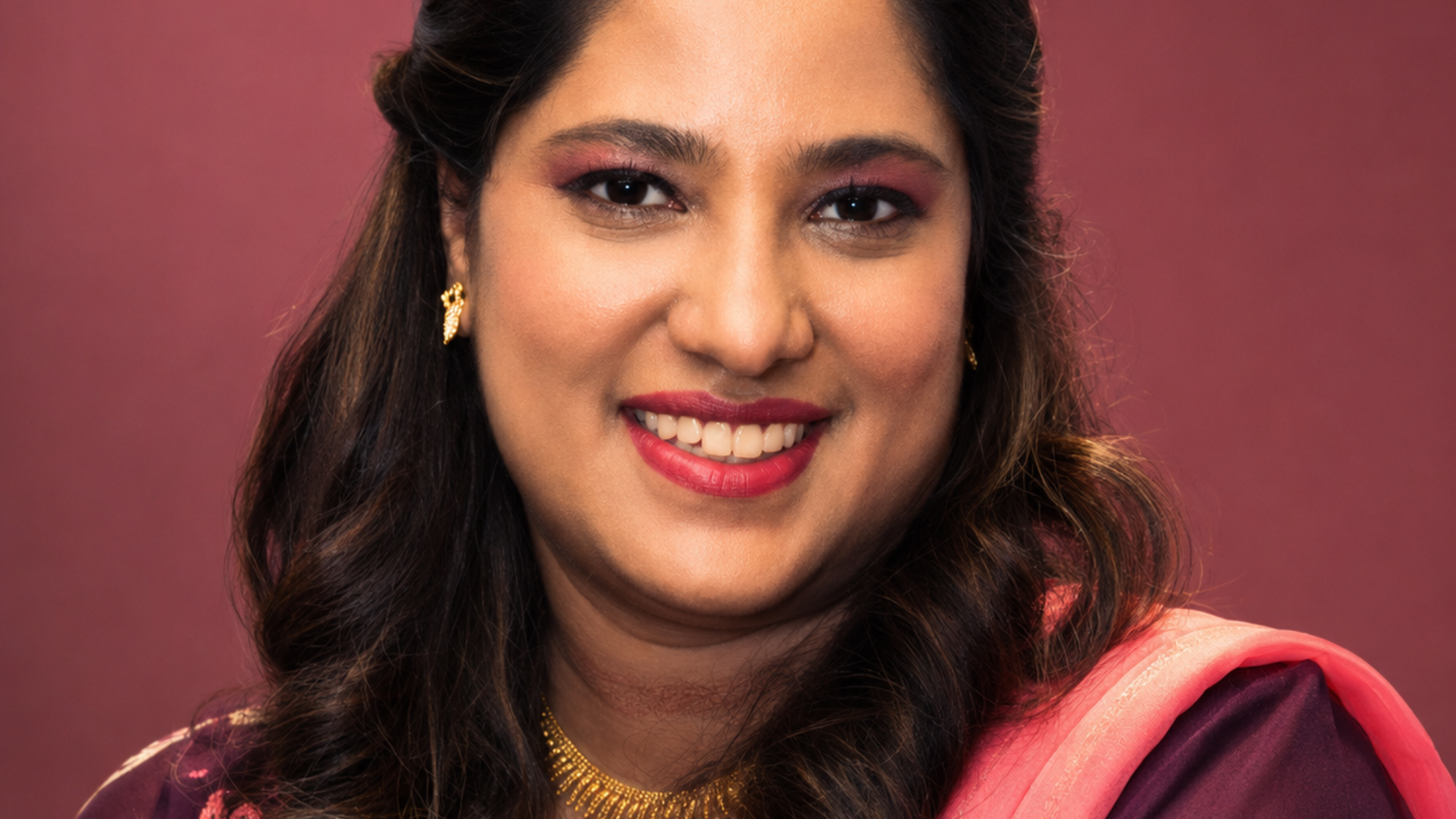
Hi, I’m Purva. I’m a storyteller at heart, and everything else I do has somehow grown from that one simple truth.

Hi, I’m Purva. I’m a storyteller at heart, and everything else I do has somehow grown
from that one simple truth.


Over the years, I’ve worn many hats—marketer, French teacher,
entrepreneur, children’s author, content strategist, and, most recently, a
mother. While they may seem like very different roles, they’ve all taught
me the same thing: people don’t remember information; they remember
how you made them feel.
This little corner of the internet is where all those worlds come together.
Here, you’ll find stories from my life as a writer, educator, entrepreneur,
and mum. I’ll be sharing honest reflections, creative musings, behind-the-scenes moments from building Krafty Kiddies and Taller Tales,
thoughts on storytelling and marketing, lessons from the classroom, and
the beautifully ordinary moments that often inspire my work.
I don’t have all the answers, and I don’t pretend to.

’m simply someone who finds joy in words, believes in lifelong learning,
and loves discovering stories hidden in everyday life.


If you’re someone who enjoys thoughtful conversations, meaningful
creativity, and the occasional reminder to slow down and notice the
little things, I think you’ll feel right at home here.

I’m so glad you stopped by.
– Purva